
Know more
Areas of the brain and their function
Brain Tumours occur in different parts of the brain so it is best to understand a bit more of the different areas of the brain and their function:
- Left temporal lobe: Hearing, vision, understanding, and memory of what is seen or heard; recognizing words; personality, behaviour, and sexual behaviour.
- Brain stem: Breathing, heart rate, digestion, level of alertness, sleep, sweating, blood pressure, temperature, and balance.
- Cerebellum: Balance, posture, and motor coordination including extremities, and some memory for reflex movements.
- Right temporal lobe: Hearing, understanding, organizing, and concentrating on what is seen or heard; recognition of musical tones, music sounds, and non-speech information (e.g., drawings). Long-term memory, personality, and behaviour, including sexual behaviour.
- Occipital lobe: Accurately interpreting what is seen and visual images. Reading and writing, finding objects, identifying colours, recognizing words and drawn objects, and recognizing whether an object is moving.
- Parietal lobe: Vision and sense of touch. Coordinating input from different senses for understanding, sensory control of the body, writing, mathematics, and language. Body positioning, handling of objects, and verbal and nonverbal memory.
- Frontal lobe: Higher intellectual functions, such as consciousness and responses to outside stimuli; personality. Motor coordination for swallowing; salivation; vocalization; chewing; and facial expressions; as well as for hands, arms, torso, pelvis, legs, and feet.
Tumor Types
There are more than 120 types of brain tumours. Today, most medical institutions use the World Health Organization (WHO) classification system to identify brain tumours. The WHO classifies brain tumours by cell origin and how the cells behave, from the least aggressive (benign) to the most aggressive (malignant). Some tumour types are assigned a grade, ranging from Grade I (least malignant) to Grade IV (most malignant), which signifies the rate of growth. There are variations in grading systems, depending on the tumour type. The classification and grade of an individual tumour help predict its likely behaviour. This section describes the most frequently diagnosed types.
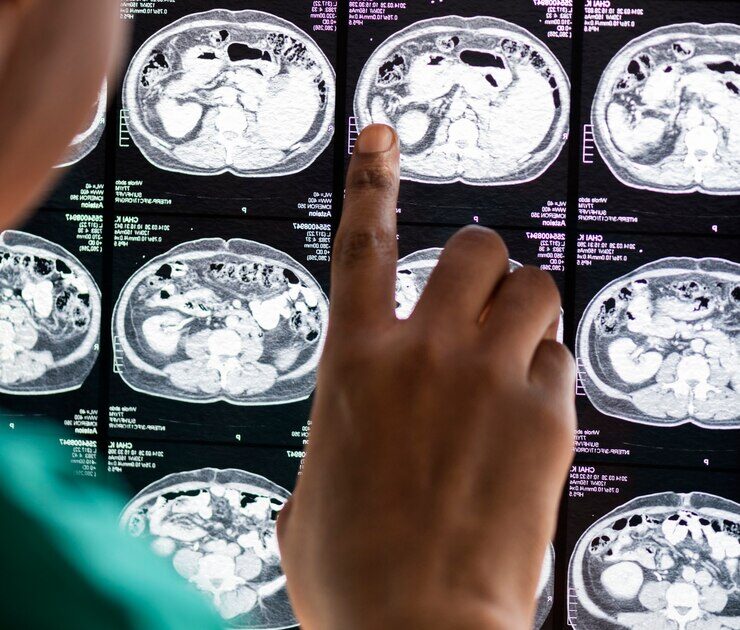
Specific tumor types:
- Acoustic Neuroma
- Astrocytoma:
- Grade I – Pilocytic Astrocytoma
- Grade II – Low-grade Astrocytoma
- Grade III – Anaplastic Astrocytoma
- Grade IV – Glioblastoma (GBM)
- Chordoma
- CNS Lymphoma
- Craniopharyngioma
- Other Gliomas:
- Brain Stem Glioma
- Ependymoma
- Mixed Glioma
- Optic Nerve Glioma
-
- Subependymoma
- Medulloblastoma
- Meningioma
- Metastatic Brain Tumors
- Oligodendroglioma
- Pituitary Tumors
- Primitive Neuroectodermal (PNET)
- Other Brain-Related Conditions
- Schwannoma
More common in children than in adults:
- Brain Stem Glioma
- Craniopharyngioma
- Ependymoma
- Juvenile Pilocytic Astrocytoma (JPA)
- Medulloblastoma
- Optic Nerve Glioma
- Pineal Tumor
- Primitive Neuroectodermal Tumors (PNET)
- Rhabdoid Tumor
- Keep in mind that many tumours have different subtypes; for example, an astrocytoma can be a juvenile pilocytic astrocytoma, an anaplastic astrocytoma or a glioblastoma. In addition, the same tumours sometimes have different names; even pathologists are not always consistent in what they call them. Finally, it is important to note that nonmalignant, or benign, brain tumours can be just as difficult to treat as malignant brain tumours.
Zimbabwe Brain Tumour Association (ZBTA)
16 Lancaster Avenue
Belvedere
Harare
Zimbabwe
 +263 774 168 535
zbtainfo@gmail.com
info@zbtazw.org